February 27, 2026
Self-Determination in Germany: the risk of ‘excessive ‘psychiatrisation’
Reports Gita Neumann for Diesseits, of the German Humanists
The enormous need among the elderly population in particular for impartial information and decision-making assistance on humane dying remains largely unmet.
As a result, there is a constant stream of new and questionable offers.
One reason for this is the regrettable reluctance of treating physicians to assist their patients in committing suicide.
Now, their special role is threatened by general restrictions in a draft bill – as ‘collateral damage’.
First of all: There is a danger that the following descriptions and research will add fuel to the fire of restrictive-conservative, psychiatric or even Christian voices in a cross-party (except AfD) legislative project that is due to be voted on in 2026.
But these distortions at Bundestag hearings must not be left to them as ‘surprise effects’ for the purpose of stirring up outrage. Premature disclosure is necessary, with the emphasis that this must not be misused to curtail self-determination rights.
Mission of suicide activist Philipp Nitschke
The nerve of a movement of senior citizens is struck by ‘suicide activist’ Philipp Nitschke (78), a former Australian doctor.
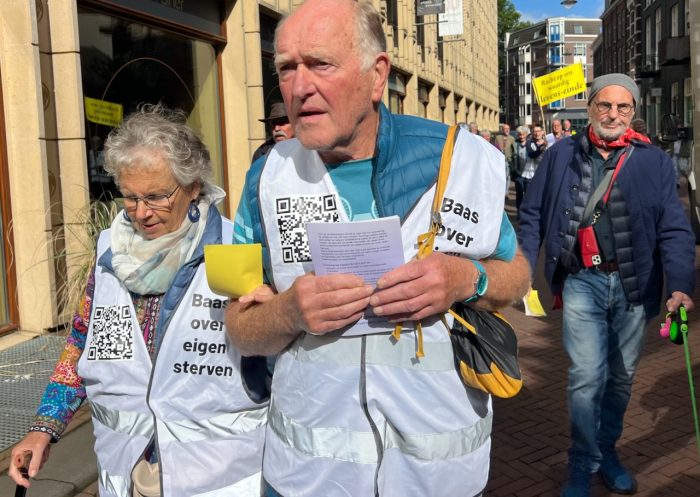
In the Netherlands, demonstrations are held under the name Cooperative Laatste Will (CLW) to demand the right to be “Baas” (boss/chief) ‘over eigen sterven’ (over one’s own death) – Nitschke is involved.
In this country, his missionary message is catching on for one main reason: citizens miss having doctors they can turn to who are already familiar with their medical conditions, prognoses and values.
Admittedly, there is little sign of a citizens’ movement among the elderly in Germany, apart from the Oldenburg working group ‘Selbstbestimmt Sterben’ (Self-determined dying) and a Berlin film series on euthanasia with audience discussions, whose 90 seats are always sold out many weeks in advance.
The participants are primarily concerned with ‘life satisfaction’ and ‘loss of dignity’ in old age – although these may only be slightly influenced by physical ailments requiring care. The onset of dementia is particularly feared.
There is an urgent need for information and neutral, open-ended counselling in line with their attitudes to life and circumstances and – even in cases of ambivalence, mere intentions to make provisions or inner conflicts – altruistic, ‘advertisement-free’ and knowledgeable discussion opportunities.
This target group does not want to turn to a prevention centre that is recognised as ‘anti-suicide’; at most – especially if loneliness is the main motive – they will turn to telephone counselling services.
It is this aspect of Nitschke’s message that is attracting interest in Germany: rational individuals who wish to commit suicide, especially those of retirement age, should have easy and affordable access to assisted suicide options, and they should be able to do so ‘autonomously’, i.e. without the involvement of euthanasia organisations or doctors who work exclusively for these organisations and are unknown to the public.
Current main players in organised assisted suicide
In Germany, three established euthanasia organisations currently offer their services for (usually medical) assisted suicide exclusively to their members.
Their contact details can be found on the portal infopunkt-sterbehilfe (managing director: Ulla Bonnekoh), which was founded in 2024:
Firstly, the German Society for Humane Dying (DGHS), by far the largest organisation with around 900 ‘assisted suicides’ and 60,000 members last year, followed by VereinSterbehilfe and Dignitas, both of which also have a (main) office in Zurich.
Also listed is the most recent addition, the organisation Linus, which does not accept members but registers applicants upon request and is listed in the imprint as ‘Privatärztliche Palliativ- und Sterbehilfegesellschaft mbH i. G.’ (Private Medical Palliative and Euthanasia Society Ltd. in formation).
According to its own figures, it now records around 500 euthanasia cases per year, which is almost as many as the two smaller associations combined. At infopunkt-sterbehilfe, under the menu item Self-determined and without a doctor, you can also find information on do-it-yourself methods and, finally, on alternatives to palliative and hospice care.
Suicide assistance activists in a liberal space
Last month, the internationally renowned Nitschke demonstrated his latest invention, a suicide collar called KAIROS, on a dummy.
It will be available to purchase in the future for a few hundred euros.
[EXITORIAL CORRECTION – The Kairos Kollar will never be available for sale. Rather, instructions on how to make your own kollar will be published. This is the entire point of Exit’s approach to the good death, you must take the action yourself.]
According to the Swiss magazine Beobachter, he described how it works as follows: ‘Press the button, it pops, you pass out and die.’
The activist said that a patient willing to use Kairos in real life had already been found.
According to Neue Zürcher Zeitung, this is set to happen soon for the first time in Switzerland.
One argument in favour of this location is that, similar to the legal situation in Germany, there is a very liberal space without legal regulations.
Back in September 2024, Nitschke had already used his previous invention for suicide in the Swiss canton of Schaffhausen, namely a futuristic-looking airtight suicide capsule called Sarco, which one could lie down in comfortably.
As head of the responsible Swiss organisation The Last Resort, Florian Willet worked for Nitschke on site.
After the death of an American woman in the Sarco (due to nitrogen being pumped in at her push of a button), the local public prosecutor’s office launched an investigation. The latter had already announced in advance that the use of the ‘Sarco’ was prohibited.
[EXITORIAL CORRECTION – Sarco does not bring about death through nitrogen. It brings about death through lack of oxygen – ‘hypoxia’ – as the nitrogen (nitrogen gas is 78% of air) displaces the air (which contains oxygen).]
After the reported death, it then took inappropriate action ‘with all severity’ against Florian Willet, the ‘defender of self-determination’, as the assisted suicide organisation Dignitas sharply criticised.
He was the only person to witness the suicide in the Sarco in a private forest in Schaffhausen – sticking to the planned project despite the legal warning.
Tragic end after use of the Sarco, with consequences
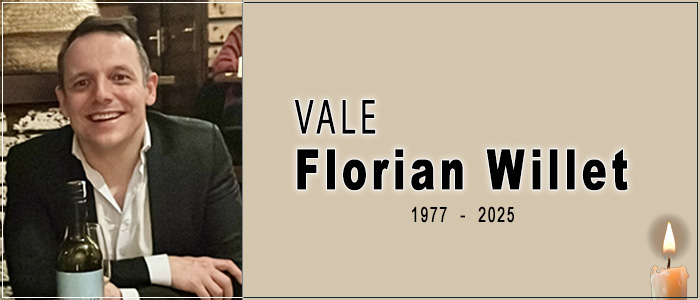
The whole thing ended tragically – after ten weeks in custody in Switzerland, Willet, who had become a prominent figure, took his own life a few months later in Cologne, with the help of the German Society for Humane Dying (DGHS).
This assisted suicide in turn led to considerable turmoil for the DGHS: due to apparent failure to comply with self-imposed due diligence checks and waiting periods.
In the case of Willet (47), who was tired of life, this lasted only 14 days, as decided exceptionally by President Robert Roßbruch – who offered his resignation in mid-January after this became known (published on the DGHS website).
However, this was withdrawn shortly afterwards and deleted. As Der Spiegel further reported, there was no mention of the fact that three prominent experts from the DGHS Ethics Advisory Board subsequently resigned.
Meanwhile, the public prosecutor’s office in Cologne is investigating DGHS Vice-President Ulla Bonnekoh and the medical euthanasia assistant cooperating with the DGHS.
Based on psychiatric treatment documents, there is an initial suspicion that Willet may not have been able to make the decision to commit suicide of his own free will ‘due to a serious mental illness’.
People who knew him and spoke to him on the phone two days before his suicide also assume (according to a reliable source of the author) that he was ‘episodically psychotic-paranoid,’ especially since he had jumped out of a third-floor window a few months earlier, sustaining serious injuries.
At the very least, further examinations of his mental capacity by an independent specialist would have been necessary.
Role of the DGHS vice-president and lack of procedural integrity
In addition, Bonnekoh (71), a qualified teacher, DGHS treasurer and member of the executive committee, did not conduct the decisive initial interview with Willet in person, but via video call.
In January of this year, she candidly reported on her problematic dual role in a home story in the Saarbrücker Zeitung newspaper entitled ‘She accompanied Saarland residents in their planned suicide’: as a suicide companion for the DGHS, she also earned money, and she stands by this, saying, ‘Professional work must be paid for.’
She invested two or three working days, including travel time, and received 1,500 euros per case – in Saarland, she would have accompanied 17 association members in their suicide.
According to her, the beginning of an accompaniment is described as follows: “Bonnekoh conducts the first personal interview with those wishing to die after the DGHS headquarters has reviewed their written request to die. She then checks once again that the suicide is voluntary and provides information about palliative alternatives.”
She then discusses the procedure, contacts the designated doctor, manages any postponements and talks to relatives.
A breach of duty of care is also said to have been the cause of a bitter power struggle in another member organisation, namely VereinSterbehilfe: between Roger Kusch, the founder in 2009 (who was already highly controversial at the time due to his desire for recognition and tendency to provoke), and the four other board members and employees of the offices in Hamburg and Switzerland, especially the Zurich-based managing director Jakub Jaros.
Existence-threatening turbulent mudslinging in the VereinSterbehilfe
Kusch was close friends with his long-time companion – now he wanted to dismiss Jaros.
The accusation is that he acted arbitrarily and concerns – which is controversial – the reckless ‘green light’ given to a member in the early stages of dementia (i.e. for the prospect of assisted suicide). Everyone else – except Kusch – argued that this was a (frequently occurring) borderline case of free responsibility, whereby the final decision would have to be made by the doctors immediately before the planned assisted suicide anyway – especially in the case of dementia patients, there was no other option.
‘There is one mistake that euthanasia associations must never make – and this is it,’ Kusch countered at the meeting on 9 February at the Hotel St. Gotthardt in Zurich.
A very detailed report on this event, which was scheduled as an extraordinary general meeting, was written by the journalist Thorsten Fuchs for the Sächsische Zeitung.
He describes how the attempted (and still unresolved) dismissal of Roger Kusch degenerated into a chaotic farce, with mutual motions to dismiss, slander, account blocking, external legal assistance, unreasonable demands and bitter disappointment for the members who had travelled to the meeting.
One attendee commented on Kusch’s accusation of insufficient freedom of responsibility as follows: ‘He has been afraid since Willet.’ In the conference room, however, employees also expressed fear of Kusch – of being dismissed or subjected to personal attacks that crossed the line, of continuing to be exposed to his authoritarian leadership style and disparaging behaviour.
There was talk of an egocentric ‘one-man show’, months of toxic working atmosphere and a lack of direct communication. It was no longer just about Jaros or quality standards, but for Kusch about the destruction of his life’s work and for others about saving an association in ruins without him.
Outlook and questions for responsible doctors
There is certainly a conflict of hierarchy and leadership smouldering at VereinSterbehilfe between the two offices in Hamburg and Switzerland.
The association Dignitas, whose public ‘face’ Ludwig Minelli recently passed away, has a similar dual structure with locations in Hanover and Zurich.
We no longer hear anything from Dignitas or Dignitas Germany, but we do hear from their long-standing legal advisor and spokesperson, Dieter Gräfe, a former senior public prosecutor, who since 2026 has been presented by an association for assisted suicide and humane dying as the so-called heart of its work.
This registered association is one of a growing number of new business models that aim to distinguish themselves with low barriers to entry, no bureaucracy, no unnecessary membership and only a short waiting period for assisted suicide. Others include freitodbegleiter.de – in the imprint: Bestattungen ZEITLOS GmbH (by Sylvia and Cornelius Ruthenburg); agency fee: a good £900); or, most recently, leidfrei-sterben.de with a palliative care physician at its ‘heart’ – in the imprint: Siham Maksoud (presented as a ‘caregiver and certified end-of-life and bereavement counsellor’) – exempt from VAT under the small business regulation; service fee €490 until the ‘green light’ is given.
Now, this may be attractive and also completely legal for individual doctors who are referred to patients and who can then charge wealthy clients several thousand euros at will.
Nevertheless, a moral question must be asked of the entire medical profession:
Why do so many colleagues shy away from this option of assisted suicide when they may even know their patients quite well from their medical records, visits and conversations?
The warnings of some representatives of psychiatric associations seem to hang over them like the sword of Damocles.
Appeal to members of the Bundestag
One of these is Thomas Pollmächer, who writes in the Thieme Fachjournal of 16 May 2024: ‘The German Medical Association takes the position that assisting in suicide is not a medical task … However, psychiatrists and neurologists will have no choice but to participate in assessing whether a decision to commit suicide can be considered free.’ This would include ‘healthy people … but also, and perhaps especially, people in the early stages of dementia.’
This view occasionally culminates in the assertion that not only ‘normal’ doctors, but also many doctors trained in psychiatry or psychosomatics, are unable to recognise a hidden impairment of the free will of their suicidal patients.
Kirstin Kappert-Gonther, one of the initiators of the new bill and an advocate of strict restrictions, probably takes a similar view.
The Green Party MP, who is herself a psychiatrist, expressed her concern about the lack of suicide prevention and protection provisions for vulnerable groups to the Evangelical Press Service as follows:
Only in this way can it be ‘ensured that it is a free and informed decision’ – according to the logic of her own moral beliefs:
‘Assisted suicide must not be the result of social, psychological or economic pressure – such as loneliness, depression or the fear of not being able to pay for a care place.’
But the opposite is true, and must never be allowed to happen in Germany: frequent or even regular psychiatric consultations and assessments.
With excessive ‘psychiatrisation’ (for which there is not even enough personnel available), members of the Bundestag would be placing insurmountable hurdles in the way of a predominantly large group of people who have made a considered, independent and lasting decision – and thus unconstitutionally torpedoing the exercise of their personal rights.
Exit