March 15, 2026
Vested Interests in the Formulation of Assisted Dying Laws
This week in Scotland, MPs debated over 300 amendments to that country’s Assisted Dying for Terminally Ill Adults Bill.
A final 175 amendments were accepted.
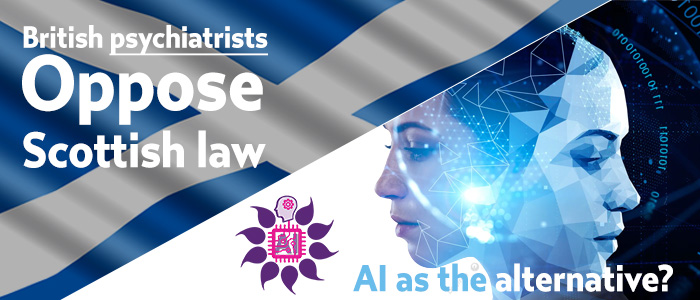
But not before the British Society of Psychiatrists – that bulwark of progressive thought (not) – withdrew their support over a technicality concerning jurisdiction.
This withdrawal of support not only created a mad, last minute scramble for more changes, but it showed once again the power of the medical (psychiatric) profession to dictate the terms of a good death for us ordinary folk.
But it is not only psychiatry who has its footprint all over this new law.
Palliative care has done quite well at embedding themselves right into the law.
Take these ‘safeguards’ as an example.
Not only must the poor person who seeks the good death be ‘about to drop dead’ (terminally illness with a prognosis of < 6 months), but they are being put through the hoops when it comes to palliative care.
It is interesting to think back to Darwin some 30 years ago.
It was palliative care that was the winner (both financially via extraordinary increases in funding and from a structural power perspective) when the Rights of the Terminally Ill Act was overturned by the Australian Parlimanet after 9 short months of successful operation.
For the Scottish law, the palliative care safeguards read as follows:
- Doctors must check whether the person has accessed, or been informed about, palliative care options
- These discussions on palliative and alternative treatments are mandatory
- Palliative care discussions must be formally recorded, along with proof that the hapless patient understands the said options
- If doctors believe that uncontrolled symptoms (or fear of such symptoms) are a reason for the request for assisted dying, they must refer the patient to a palliative care specialist.
Where to begin?
If you are so sick with your terminal illness that you just want out, do you not think that you would have explored palliative care?
We are not talking about children here.
We are talking about rational, suffering adults who must be at the absolute end of their tether.
Infantilising terminally ill patients when they are at their most vulnerable is not only incredibly paternalistic but it is also cruel and inhumane.
Terminally ill patients do not need protecting from their families. In reality, they need to protecting from the interfering State, as represented by various arms of the medical profession.
Should the Scottish bill pass, Exit expects it will do little to ease the popularity of Going to Switzerland.
While assisted dying in Switzerland absolutely has its drawbacks (eg. the exorbitant cost), the doctors do come with a more relaxed mindset.
Personal autonomy over one’s end is a much more respected philosophy on the continent than in ‘nanny states’ such as the UK, Australia or New Zealand.
For these reasons, the Scottish bill is intensely disappointing but it does inspire Exit to continue our work in the AI mental capacity assessment sector as one means of de-medicalising assisted dying in all its forms.
Exit